Context
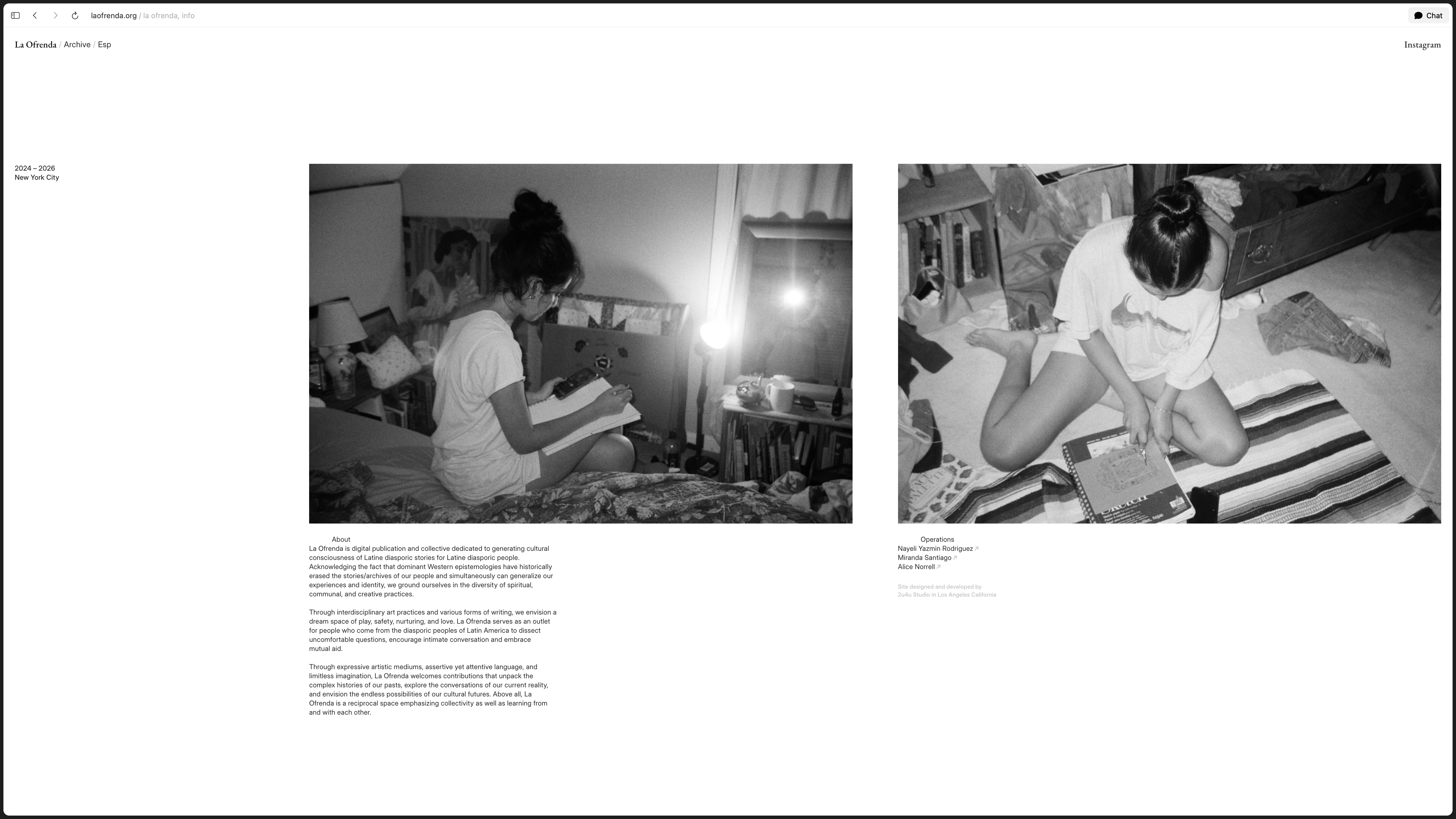
La Ofrenda started as an NYU zine club, a collective of students making space for Latine diasporic stories through interdisciplinary art and writing. As a founding member, I watched the club reach a natural end. Over three issues (Utopia, Revolución, and Revival), contributors explored diasporic identity through poetry, photography, collage, video, and personal archives.
The physical zines, Instagram posts, and Are.na channels risked scattering. The site is an archival act: not a generic portfolio, but a deliberate ofrenda, an offering that keeps the collective's work accessible after the club itself is gone.
Utopia(s) is where realities become malleable; "un mundo donde quepan muchos mundos".
Approach
Instead of standing up a traditional CMS, the site treats Are.na, the platform the collective already used to curate work, as the single source of truth. Next.js ISR pulls structured project data at build time; nested channels, PDFs, and video embeds map cleanly to issue pages.
The design intent was publication-first: minimal chrome, typography-led, motion as atmosphere, not a startup landing page.
The Experience
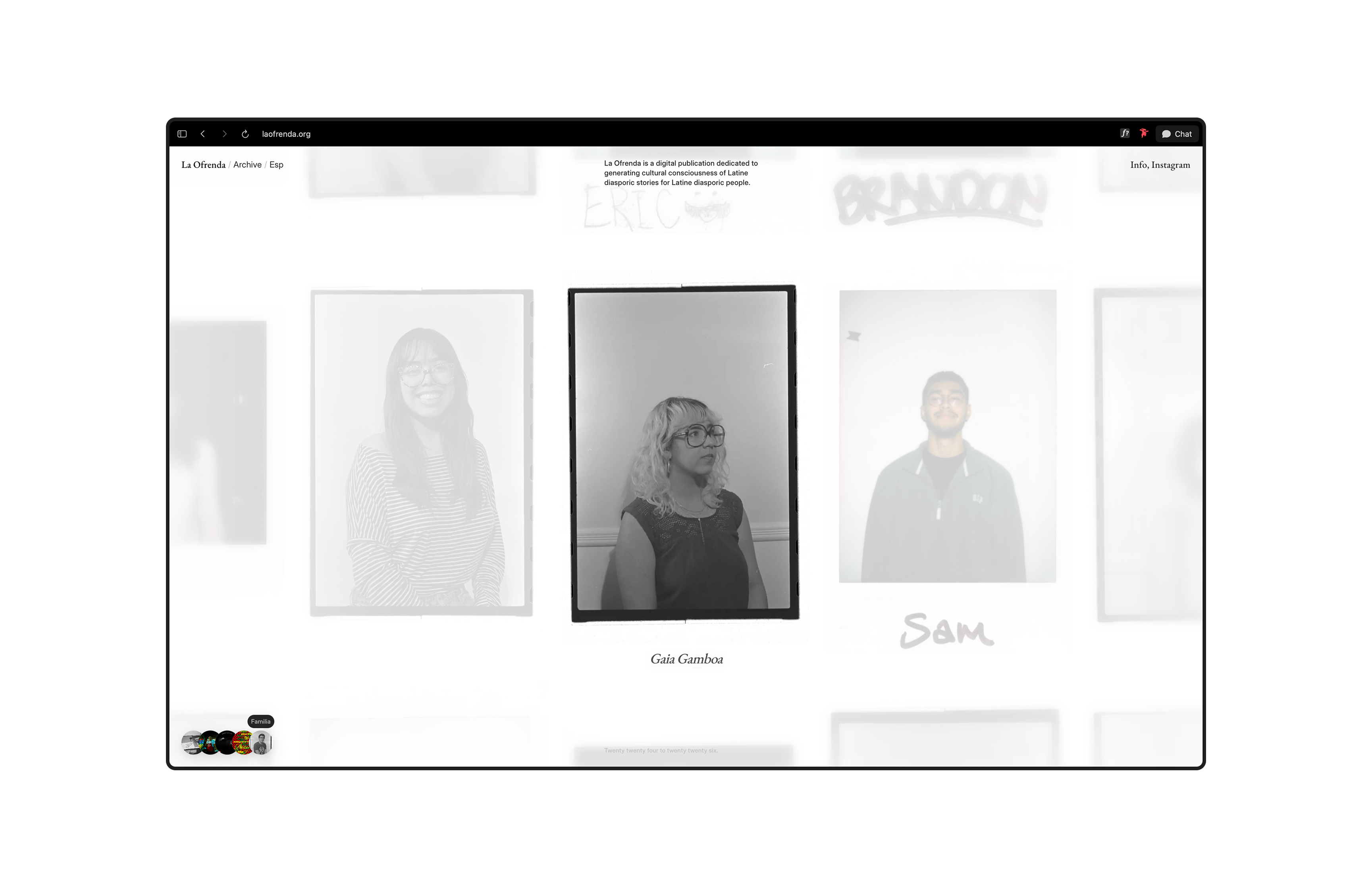
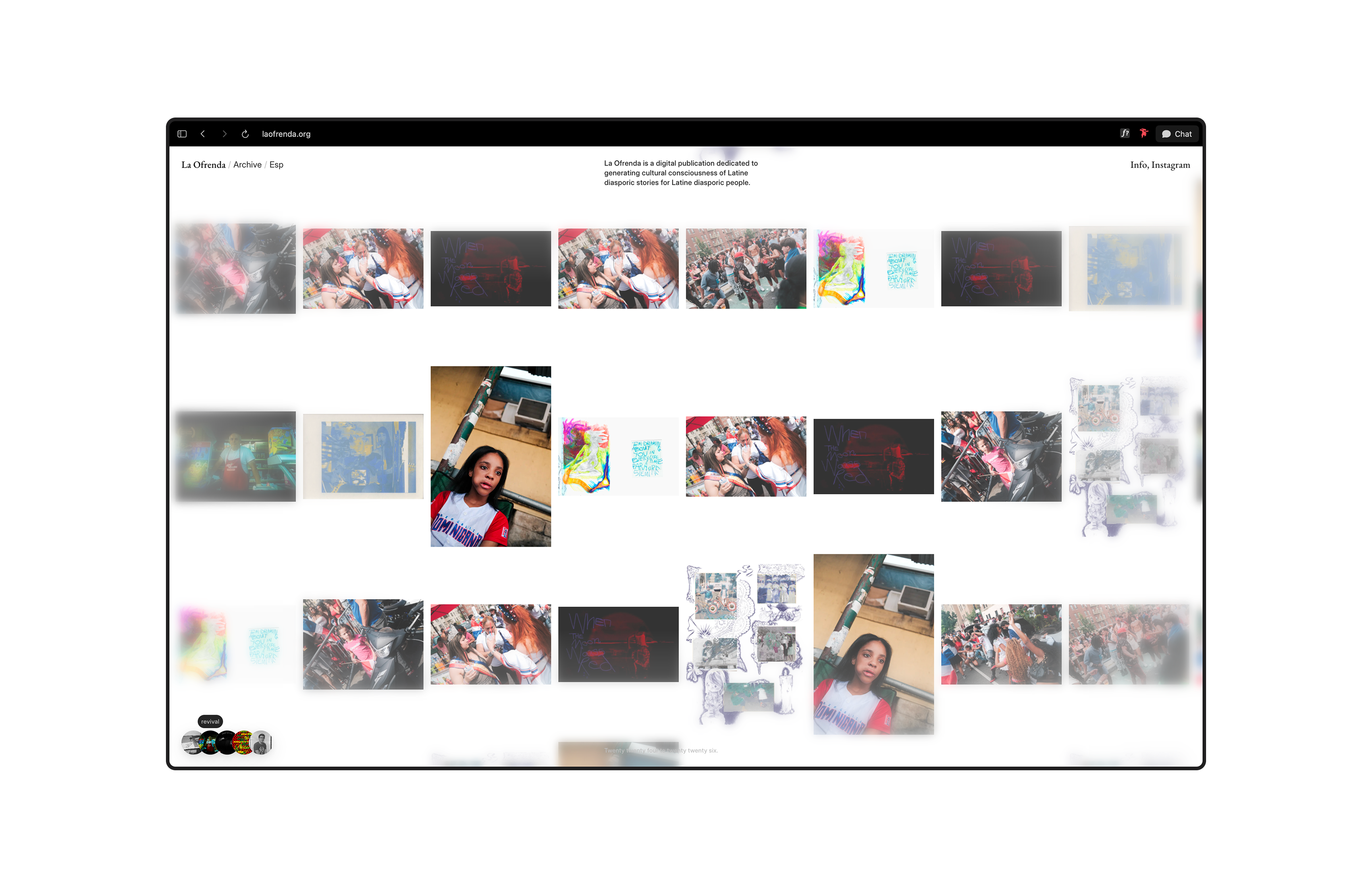
Two modes, one archive: an infinite canvas for exploration, and editorial issue pages for reading.
Publication as experience
The homepage infinite canvas recreates zine collage logic: images repeat and wrap, you zoom into one piece and drift to the next. The archive and issue pages are editorial and readable; the home page is exploratory.
Three Issues
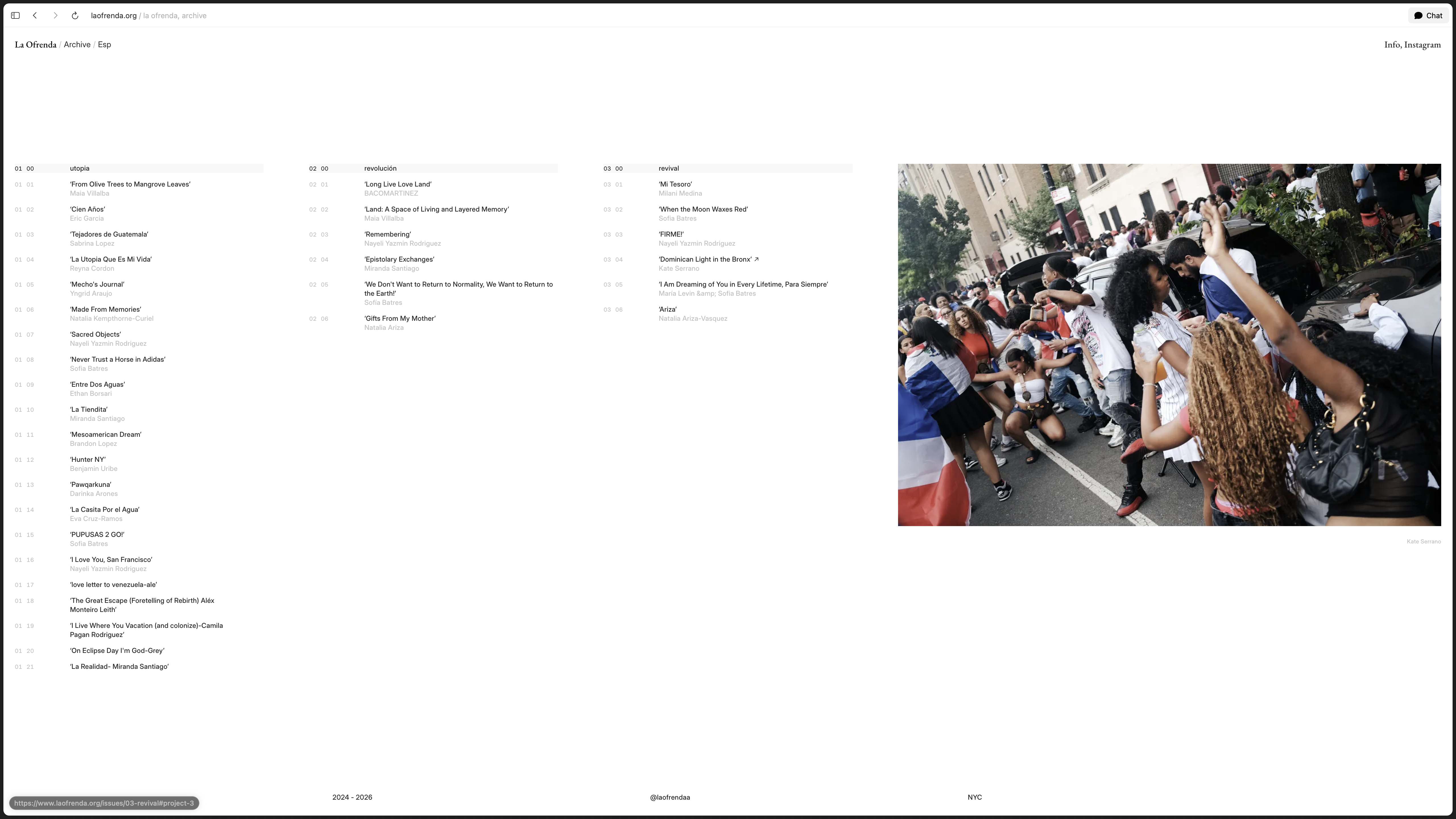
Each issue has a full editor's note, contributor galleries, PDF embeds, and links back to primary sources on Are.na. Static routes at /issues/01-utopia, /issues/02-revolucion, and /issues/03-revival are permanent, shareable archive URLs.
Revival can appear as a revolutionary act of remembrance.
Technical
Next.js 16 + Are.na CMS + Three.js infinite canvas, with bilingual UI and ISR-backed content fetching.
Outcome
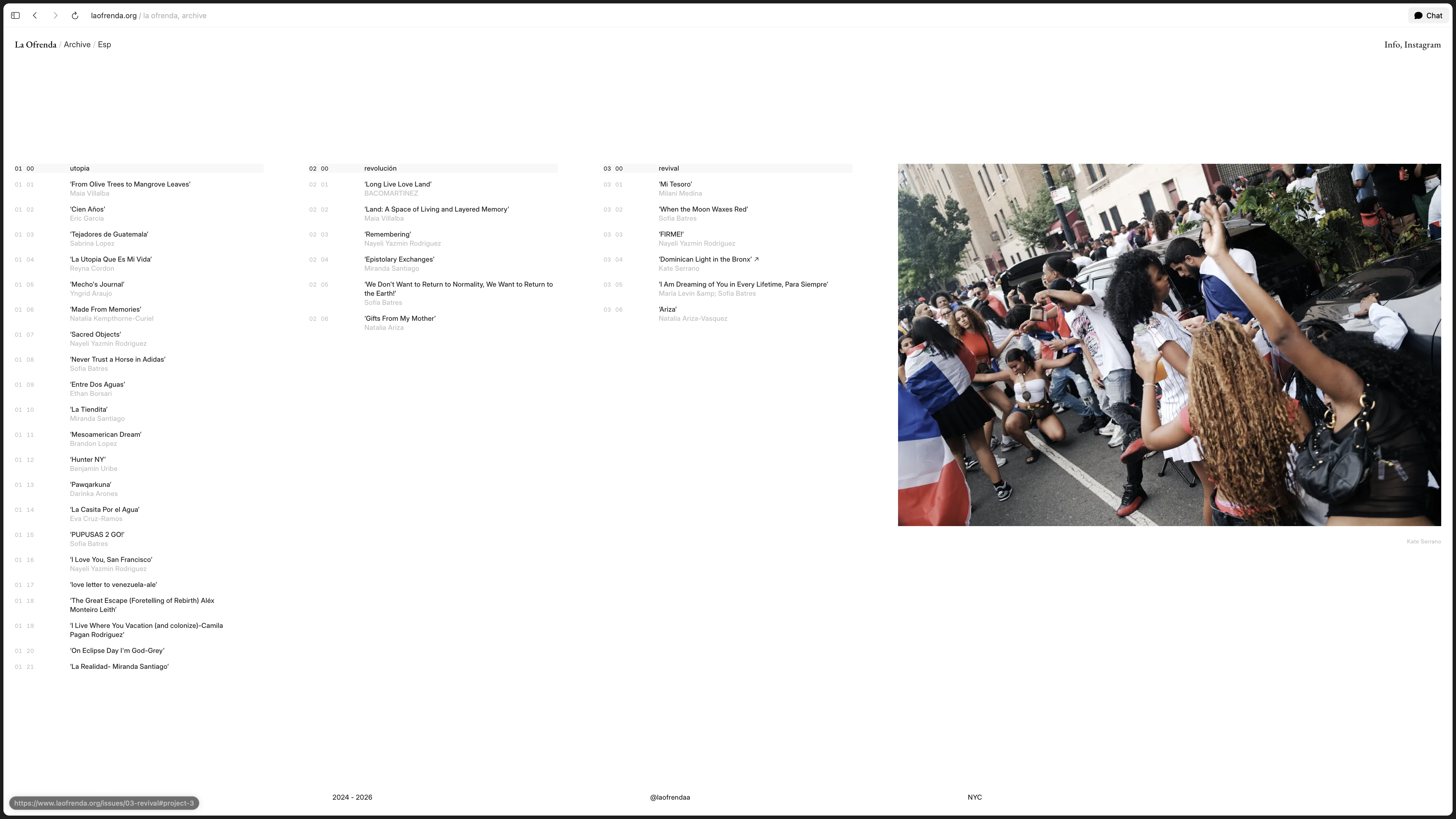
Three issues archived, Utopia, Revolución, Revival, spanning 2024–2026, with bilingual access and zero manual content duplication.
La Ofrenda's mission rejects the erasure and flattening of Latine diasporic experience. The site extends that ethic: bilingual by default, contributor names preserved, links back to primary sources on Are.na, and editor's notes that frame each issue's political and poetic stakes.
When the club wound down, this became the permanent home for every contributor, every issue, every mundo we made together.