Research
We interviewed our internal team — photographers, writers, and editors — to understand friction points with the existing workflow. We also studied media archives from zines, museum collections, and niche publishing blogs.
 NASA Image & Video Library
Mission-based taxonomy and rich metadata make complex archives browsable for everyday readers.
 NYT Photo Archive
IPTC/EXIF-driven tagging and editor-centric search turn a huge catalog into fast, story-ready pulls.
 The Met Collection
Object-level metadata and consistent curation show how structure elevates narrative discovery.
 Europeana Collections
Aggregated, normalized metadata with storytelling layers bridges archival rigor and engaging public exploration.
Bringing the project to life! Initially prototyped in Figma, I led product design and collaborated with a developer assistant to architect the system. I chose languages like p5.js for a CRT-inspired landing interface, and built the archive platform using modern web frameworks like React and Next.JS with performance and accessibility in mind. I implemented:
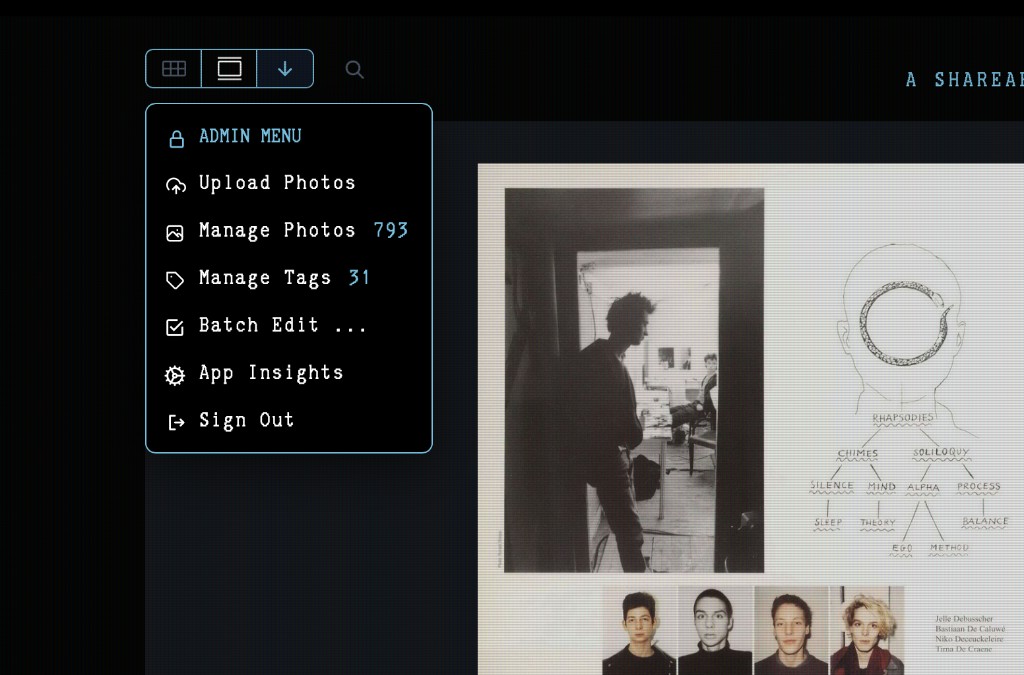
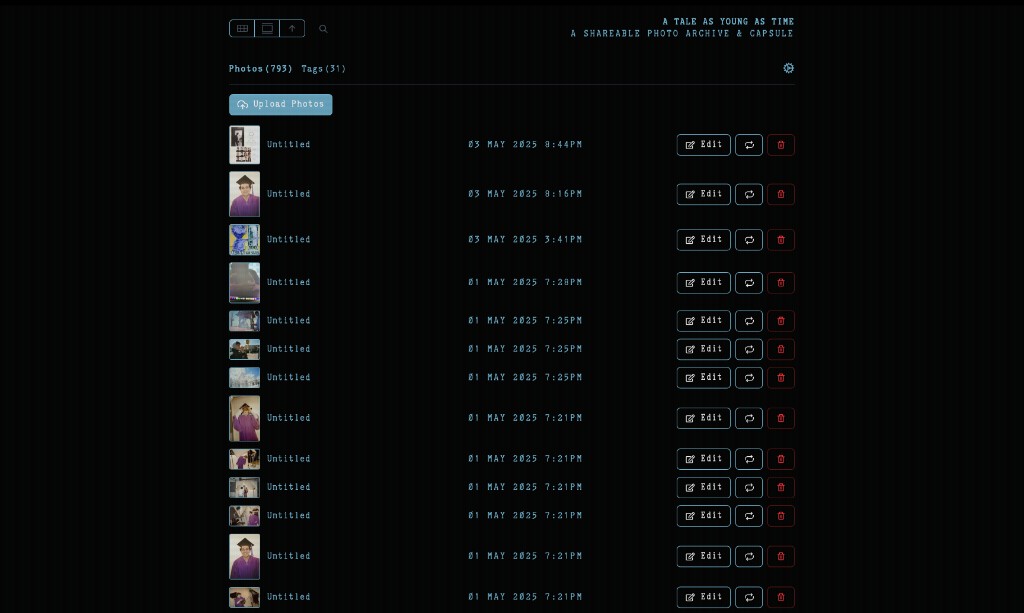
- Admin login with role-based permissions so team members could upload and organize visual content securely.
- EXIF metadata extraction, allowing contributors to upload photos that retained location, time, and camera data — turning every upload into a narrative.
- Infinite scroll, OG image generation, dark/light mode toggle, and a CMD-K search function to allow fluid internal access and browsing.
❗️ built with Sam Becker's open source photo blog maker
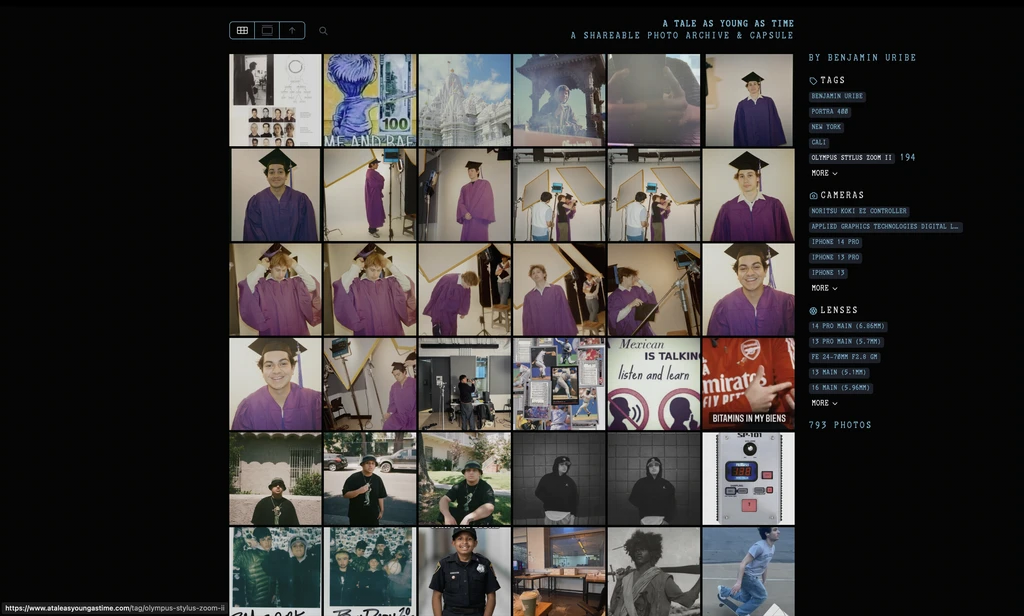
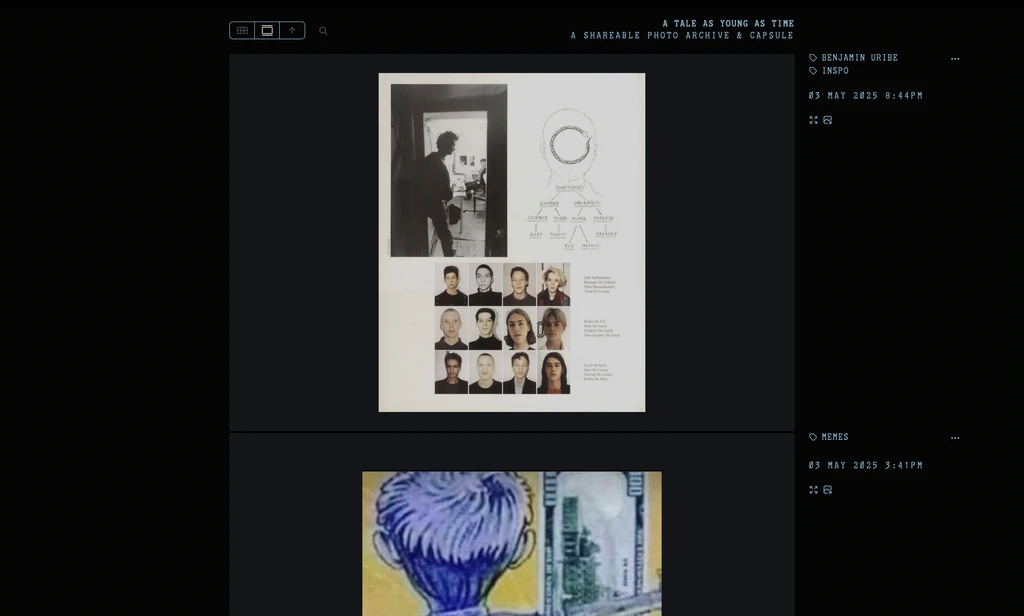
A members-only tool + supporter interface in one
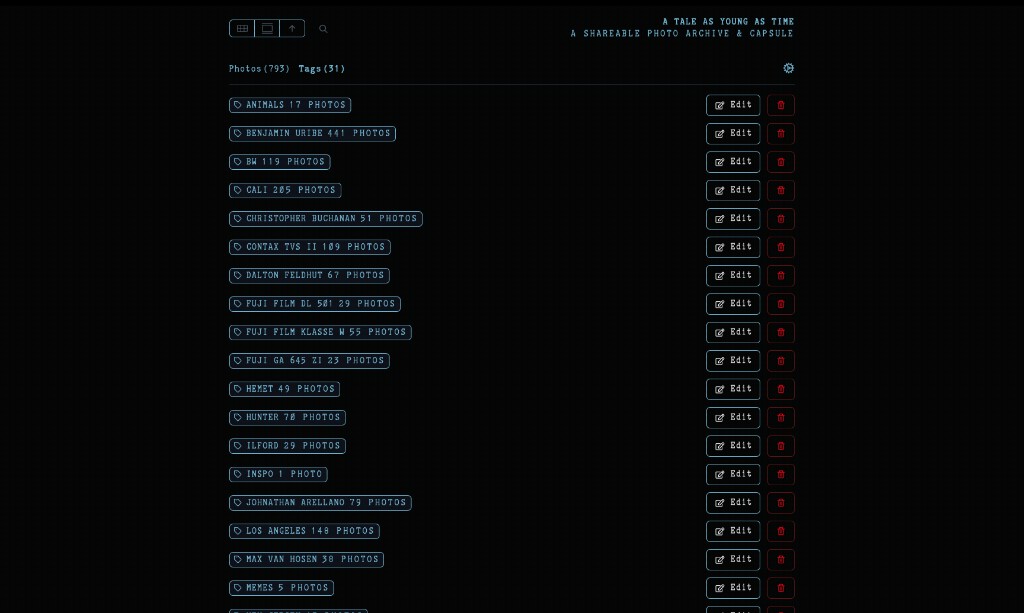
Backed by data, the entire system's UI was designed with a photo-first philosophy: gallery-like layouts, minimal typography, and spatial breathing room.
From a branding and UX standpoint, I created a matrix-style digital clock landing screen that uses real-time PST data. This clock also doubles as an ambient navigation experience, tying the archive's ethos to themes of time, memory, and location — specifically, the Inland Empire and Brooklyn.
Features
The platform was built with a robust set of features to enhance both creator workflow and audience experience:
- 1Built-in auth
- 2Photo upload with EXIF extraction
- 3Organize photos by tag
- 4Infinite scroll
- 5Light / CRT dark mode
- 6Automatic OG image generation
- 7CMD-K menu with photo search
Learnings
This was my first experience using every tool in this stack outside of Figma. Creating my first repo's, learning how to use Cursor and Claude to write Next.JS code, experimenting in p5.js, and then of course, executing my ideas. It was an exhaustive process, but my designer brain was re-wired for the best. Can I call myself a design engineer now?
Internally, the BUM DIARY team cut their content-publishing time by 85%, with more consistent tagging, archiving, and photo contributions across coasts.
- The project validated my design instincts and pushed me technically — building a functional archive system, performance-optimized landing interface, and dynamic user experience without relying on prebuilt CMS tools like WordPress.
- For our audience, it's now more than just a blog — it's a living memory capsule, made for us, by us.